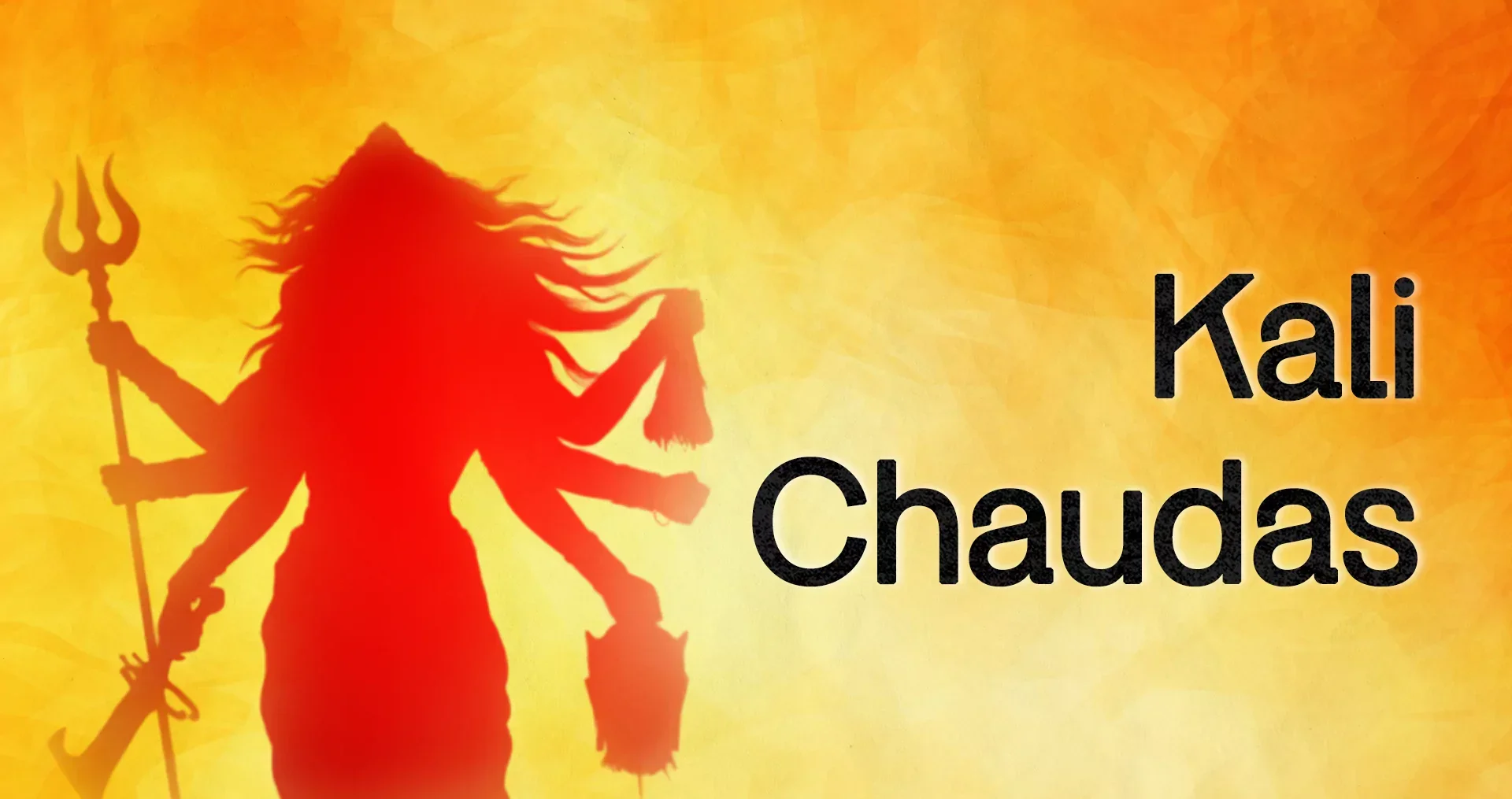
Kali Chaudas is associated with prayers for protection, strength and the removal of darkness during the Diwali festive period. Particularly observed in Gujarat and parts of western India, the occasion has its own regional customs and night-time worship traditions.
Kali Chaudas 2026 falls on Saturday, 7 November. Although its name is often used alongside Naraka Chaturdashi and Choti Diwali, their observance dates and religious associations can differ. Understanding these differences helps explain why Kali Chaudas is observed on 7 November while Naraka Chaturdashi falls on 8 November this year.
When Is Kali Chaudas in 2026?
Kali Chaudas will be observed on Saturday, 7 November 2026. It is associated with Krishna Paksha Chaturdashi, the fourteenth lunar day of the waning fortnight during the Diwali period.
For Kali Chaudas, the presence of Chaturdashi during the prescribed midnight period is important. The observance therefore follows the relevant night, rather than simply the date on which Chaturdashi is present at sunrise.
Why Is Kali Chaudas on 7 November and Naraka Chaturdashi on 8 November?
A lunar tithi does not necessarily begin at sunrise or end at midnight. It can extend across parts of two calendar dates. Different festivals also follow different rules for selecting the day of observance.
Kali Chaudas is associated with night-time worship, while Naraka Chaturdashi is associated with early-morning observances, including the traditional oil bath known as Abhyanga Snan. In 2026, these different requirements place Kali Chaudas on 7 November and Naraka Chaturdashi on 8 November.
This distinction is particularly useful when planning worship. Seeing Chaturdashi mentioned against both dates does not mean that every ritual connected with it should be performed on the same day.
Significance of Kali Chaudas
In communities that observe Kali Chaudas, the occasion is associated with honouring Goddess Kali and offering prayers for protection and courage. Its regional traditions emphasise confronting darkness and seeking strength in the days leading up to Diwali.
The festival’s significance can be understood through three related aspects:
Prayers for Protection and Strength
Worshippers approach Goddess Kali with prayers for protection from harmful influences and the strength to face difficulties. These are expressions of religious faith within the traditions that observe the occasion.
Such prayers should be understood as devotional appeals, rather than promises that a particular offering will guarantee wealth, cure illness or remove every difficulty.
Preparation for Diwali
Kali Chaudas falls within the period when households prepare for Diwali through cleaning, arranging lamps and gathering worship items. For observing families, it provides a distinct occasion for prayer before the celebrations that follow.
However, its customs should not be merged automatically with every practice associated with Choti Diwali, Roop Chaudas or Naraka Chaturdashi. Each has its own regional context.
Continuity of Family and Regional Traditions
The way Kali Chaudas is observed often comes through family practice, temple guidance and local custom. This explains why the offerings, prayers and ceremonies may differ between households.
Describing these differences helps preserve the festival’s cultural context without presenting one community’s practice as compulsory for everyone.
Kali Chaudas Rituals and Regional Traditions
Kali Chaudas rituals vary according to the community and form of worship followed. In observing households, preparations may include arranging the worship space, lighting a lamp and offering flowers, fruits or naivedya.
These practices form part of an established tradition; they are not a single, universally prescribed Kali Chaudas puja vidhi.
Worship of Goddess Kali
In traditions centred on Goddess Kali, worshippers offer prayers and suitable offerings according to their customary procedure. The prayers and form of worship depend on the family or temple conducting the ceremony.
A description of this regional worship should also be distinguished from the devotional practices followed at a Vaishnava temple. Mentioning a festival’s customs does not mean that every temple performs those ceremonies.
Lighting Lamps and Making Offerings
Lamps, flowers and food offerings appear in several regional observances during the Diwali period. Their particular use on Kali Chaudas depends on the tradition followed.
Likewise, a fixed number of lamps or a specific list of ingredients should not be treated as essential for every household unless it belongs to that household’s established practice.
Night-Time Observance
Night-time worship is an important distinction associated with Kali Chaudas. Some communities follow specialised ceremonies, while others maintain a simpler household observance.
Those detailed ceremonies belong to their respective traditions. They should not be combined into a general home-puja procedure without an appropriate religious source or guidance.
Kali Chaudas, Naraka Chaturdashi, Choti Diwali and Kali Puja
These names frequently appear together in discussions about Diwali, which can make their meanings confusing.
Kali Chaudas
Kali Chaudas is particularly associated with western Indian regional traditions and night-time worship connected with Goddess Kali. Its date is determined by the relevant Chaturdashi night.
Naraka Chaturdashi
Naraka Chaturdashi commemorates Lord Krishna’s victory over Narakasura, also known as Bhaumasura. In southern Indian celebrations, an early-morning bath and prayers to Lord Krishna are prominent observances.
The Naraka Chaturdashi story explains the Lord’s journey to Narakasura’s kingdom, His victory over the demon and the release of the captive princesses.
Choti Diwali
Choti Diwali is a familiar name used in northern India for the smaller celebration associated with the Diwali period. Naraka Chaturdashi is also called Choti Deepavali in parts of northern India, where celebrations may take place at night. The name therefore reflects regional usage rather than a separate rule that makes all these observances identical.
Bengal Kali Puja
Bengal Kali Puja is associated with Amavasya, while Kali Chaudas follows Chaturdashi. Both involve Goddess Kali worship, but they have different calendar requirements and should be distinguished when discussing festival dates.
Remembering Lord Krishna During the Diwali Period
For Krishna devotees, Naraka Chaturdashi is an occasion to remember the Lord’s protection and hear about His victory over Narakasura. Hearing this pastime keeps the focus on Lord Krishna’s activities and His compassion towards those who sought His shelter.
Devotees can also continue their regular worship through chanting, prayers and offerings to the Lord. In Bhagavad Gita 9.26, Krishna explains that He accepts a leaf, flower, fruit or water offered with love and devotion.
The emphasis is on serving Him sincerely. These everyday practices of bhakti should be understood in their own right, rather than presented as a special Kali Chaudas ritual.
Adapted from the Gupt Vrindavan Dham blog: Kali Chaudas 2026: Date, Rituals and Significance.