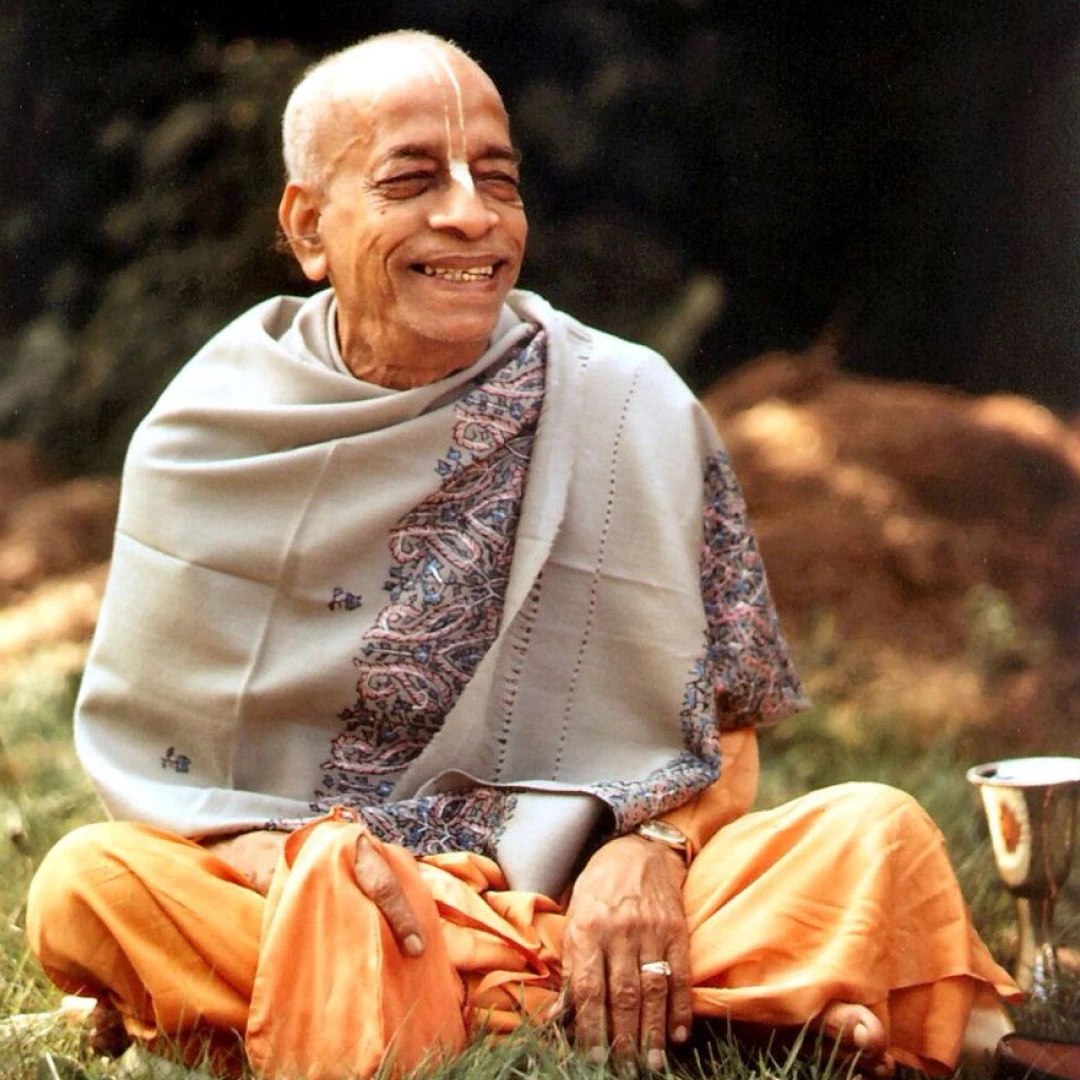
Ye Suddha Bhakta Ye Krsna Tomate Satata
Ye Suddha Bhakta Ye Krsna Tomate Satata
A.C. Bhaktivedanta Swami
Purve Ami Balechilam Suryake Pratham
Bhajan
A.C. Bhaktivedanta Swami
41 verses · Lyrics only · English, Hindi
Purve Ami Balechilam Suryake Pratham
A.C. Bhaktivedanta Swami
sri bhagavan kahilen: purve ami balechilam, suryake pratham ei se niskam karm apurva kathan surya balechila pare manuke svaputre iksvaku sunila pare parampara sutre
The Blessed Lord said: I instructed this imperishable science of yoga to the sun-god, Vivasvan, and Vivasvan instructed it to Manu, the father of mankind, and Manu in turn instructed it to Iksvaku.
sei parampara dvar rajarsigan eke eke sune saba gitara vacan kalakrame parampara hayeche vinasta parampara vina jana saba artha bhrasta
This supreme science was thus received through the chain of disciplic succession, and the saintly kings understood it in that way. But in course of time the succession was broken, and therefore the science as it is appears to be lost.
ataeva kahi punah sei puratan punarvara parampara karite sthapan bhakti vina ke bujhibe gitara rahasya tumi mor priya sakha karaha vimusya
That very ancient science of the relationship with the Supreme is today told by Me to you because you are My devotee as well as My friend; therefore you can understand the transcendental mystery of this science.
arjun kahilen: tumi ta' navina sakha sedina janmile koti koti varsa purve surya janma nile e katha ki kare bujhi purva eta dine upades puratan tumi balechile
Arjuna said: The sun-god Vivasvan is senior by birth to You. How am I to understand that in the beginning You instructed this science to him?
sri-bhagavan kahilen: he arjun bahu janma tomara amar hayeche purvakale se saba apar bhuli nai ami sei tumi bhule gecha ami bibhu tumi jiv ei bhave acha
The Blessed Lord said: Many, many births both you and I have passed. I can remember all of them, but you cannot, O subduer of the enemy!
sakaler niyamak ajanma haiya avyayatma paramatma bhuvana bhariya tathapi sva-sakti sathe janma lai ami sei bhagavatta mor bhala bujha tumi
Although I am unborn and My transcendental body never deteriorates, and although I am the Lord of all sentient beings, I still appear in every millennium in My original transcendental form.
yada yada dharma-glani haila samsare he bharat! visva-bhar laghu karibare adharmer abhyutthan dharma-glani hale atmara srjan kari dekhaye sakale
Whenever and wherever there is a decline in religious practice, O descendant of Bharata, and a predominant rise of irreligion--at that time I descend Myself.
sadhuder paritran asadhur vinas ye kare adharma tar kari sarva-nas ar dharma sthiti artha karite sadhan yuge yuge asi ami manase vacan
In order to deliver the pious and to annihilate the miscreants, as well as to reestablish the principles of religion, I advent Myself millennium after millennium.
amara ye janma-karma se ati mahan ye bujhila sei katha seo bhagyavan se chadiya deha ei nahe punarjanma mama dhame phiri ase chade jada dharma
One who knows the transcendental nature of My appearance and activities does not, upon leaving the body, take his birth again in this material world, but attains My eternal abode, O Arjuna.
chadi rag bhay krodh trividha asar manmaya madbhakti sadhya kariya vicar vahu bhakta jnani sab tapasyar dvare vidhauta haiya pap peyeche amare
Being freed from attachment, fear and anger, being fully absorbed in Me and taking refuge in Me, many, many persons in the past became purified by knowledge of Me--and thus they all attained transcendental love for Me.
yebhave ye bhaje more ami sei bhave yatha-yogya phal di-i apana prabhave amakei sarva mate cahe sarva thmai agupichu matra hay pathe bhed nai
All of them--as they surrender unto Me--I reward accordingly. Everyone follows My path in all respects, O son of Prtha.
karma-kandi siddhi lagi vahu dev-devi iha-lok hay sab bahu sevya sevi sighra yei karma-phal e manusya-loke anitya se phal bhunje duhkhe ar soke
Men in this world desire success in fruitive activities, and therefore they worship the demigods. Quickly, of course, men get results from fruitive work in this world.
cari varna srsti mora guna karma bhage yar yaha gun hay kahiba se age tathapi se nahi ami guna karma majhe yadyapi niyanta ami sakalera kaje
According to the three modes of material nature and the work ascribed to them, the four divisions of human society were created by Me. And, although I am the creator of this system, you should know that I am yet the non-doer, being unchangeable.
ami karma-phale lipta nahi kona kale sprha kabhu nai mor kona karma-phale amara karmera katha bujhe bhala mate bandhana ghucila tar karmera phalete
There is no work that affects Me; nor do I aspire for the fruits of action. One who understands this truth about Me also does not become entangled in the fruitive reactions of work.
ei gudha tattva-katha purve ye bujhila anayase tara sab samsara tarila tumi purva mahajane yatha anusar yathavat siddhi-labh haibe vistar
All the liberated souls in ancient times acted with this understanding and so attained liberation. Therefore, as the ancients, you should perform your duty in this divine consciousness.
kiva karma akarma va karite vicar bada bada muni rsi hay camatkar tai se baliba ami kiva karma hay janile se tattva-katha asubhera ksay
Even the intelligent are bewildered in determining what is action and what is inaction. Now I shall explain to you what action is, knowing which you shall be liberated from all sins.
karma ye bujhite tumi akarma bujhibe vikarma bujhite tatha bhave buddha habe
The intricacies of action are very hard to understand. Therefore one should know properly what action is, what forbidden action is, and what inaction is.
durgama karmera gati nigudha se tattva ye bujhila se bujhila tahara mahattva karmete akarma dekhe akarme ye karma ye buddhiman manusya se bujheche marma
One who sees inaction in action, and action in inaction, is intelligent among men, and he is in the transcendental position, although engaged in all sorts of activities.
sakala samarambhe yar samkalpa varjan jnanagnite dagdha karma panditye grahan
One is understood to be in full knowledge whose every act is devoid of desire for sense gratification. He is said by sages to be a worker whose fruitive action is burned up by the fire of perfect knowledge.
tyakta karmaphalasanga asraya vihin nitya trpta nityananda nija karme lina se pravrtta nija karme kichu nahi kare anasakta karmaphal sacchanda vihare
Abandoning all attachment to the results of his activities, ever satisfied and independent, he performs no fruitive action, although engaged in all kinds of undertakings.
karma-phale sprha-hin datta citta atma sarva parigraha tyakta yukta se sarvatha sarira nirvaha matra karma yei kare kariyao sarva karma sarva papa hare
Such a man of understanding acts with mind and intelligence perfectly controlled, gives up all sense of proprietorship over his possessions and acts only for the bare necessities of life. Thus working, he is not affected by sinful reactions.
yatha-labh tatha tusta sarva dvandva mukta nirmatsar samacitta nija karme yukta siddhasiddha samadrsti nahita vidves kariyao sarva karma karma-phala ses
He who is satisfied with gain which comes of its own accord, who is free from duality and does not envy, who is steady both in success and failure, is never entangled, although performing actions.
brahma-maya karma tar brahmete arpan brahma habi brahma agni hota brahma-phal tahara se brahma-gati niscita nirnaya brahma karma samadhistha sarvatra vijay
The work of a man who is unattached to the modes of material nature and who is fully situated in transcendental knowledge merges entirely into transcendence.
rupa rasa sabda sparsa visaye samyam yajnahuti sei haya indriya haban
A person who is fully absorbed in Krsna consciousness is sure to attain the spiritual kingdom because of his full contribution to spiritual activities, in which the consummation is absolute and that which is offered is of the same spiritual nature.
sarvendriya karma pran samyam agnite yatnasil yata yogi habana karite atma-samyamadi yog jnana dipite prthak prthak yogi hay yukta se yogete
Some yogis perfectly worship the demigods by offering different sacrifices to them, and some of them offer sacrifices in the fire of the Supreme Brahman.
dravya-yajna tapo-yajna yoga-yajna yata svadhyaya yogira jnan samsita se vrata
Some of them sacrifice the hearing process and the senses in the fire of the controlled mind, and others sacrifice the objects of the senses, such as sound, in the fire of sacrifice.
pranapan yogakriya apane haban pranapan gatiruddha pranayami han aharadi kharva kari niyata ahar pranke pranete dyaya homera akar
Those who are interested in self-realization, in terms of mind and sense control, offer the functions of all the senses, as well as the vital force [breath], as oblations into the fire of the controlled mind.
ei sab tattvavit ksin papa hay krame krame papahin brahma se prapay yajna nistha bhoji tara nispapa jivan yogya vyakti hay labhe brahma sanatan
There are others who, enlightened by sacrificing their material possessions in severe austerities, take strict vows and practice the yoga of eightfold mysticism, and others study the Vedas for the advancement of transcendental knowledge. And there are even others who are inclined to the process of breath restraint to remain in trance, and they practice stopping the movement of the outgoing breath into the incoming, and incoming breath into the outgoing, and thus at last remain in trance, stopping all breathing. Some of them, curtailing the eating process, offer the outgoing breath into itself, as a sacrifice.
ihaloke yajna vina kona sukh nai paralok vina yajne kemane se pai
All these performers who know the meaning of sacrifice become cleansed of sinful reaction, and, having tasted the nectar of the remnants of such sacrifice, they go to the supreme eternal atmosphere.
he purusottama! atah yajnai ye dharma ar sab yaha kichu sakala vikarma vedadi sastrete tatha bahu yajna hay kata sakha prasakhadi ke kare nirnay se sab yajnadi jana saba karmajan muktipatha sei jana yajna se sarvan
O best of the Kuru dynasty, without sacrifice one can never live happily on this planet or in this life: what then of the next?All these different types of sacrifice are approved by the Vedas, and all of them are born of different types of work. Knowing them as such, you will become liberated.
kintu sreya jnana-yajna dravya yajnapeksa jnanira nahika ar karmaja apeksa sarva karma ses hay jnane samapan karma-suddha citte hay jnanera sadhan
O chastiser of the enemy, the sacrifice of knowledge is greater than the sacrifice of material possessions. O son of Prtha, after all, the sacrifice of work culminates in transcendental knowledge.
ataeva se vijnan ye janibare cay upayukta gurupada karaye asray pranipat pariprasna sevara sahit guru-sthane jani lao apanar hit
Just try to learn the truth by approaching a spiritual master. Inquire from him submissively and render service unto him. The self-realized soul can impart knowledge unto you because he has seen the truth.
se sab jnanera katha bujhite parile moha ar habe nahi harile jitile takhana se atma-drka dekhe brahma-sama sampurna darsana sei samparka se sama
And when you have thus learned the truth, you will know that all living beings are but part of Me--and that they are in Me, and are Mine.
papi hate papi yadi haye thaka tumi tathapi jnanera pote taribe apani
Even if you are considered to be the most sinful of all sinners, when you are situated in the boat of transcendental knowledge, you will be able to cross over the ocean of miseries.
pravala agnite yatha kastha bhasmasat jnanagni jvalile papa sakala nipat ataev jnanatulya nahi se pavitra taha nahe jada jnan labh yatra-tatra
As the blazing fire turns firewood to ashes, O Arjuna, so does the fire of knowledge burn to ashes all reactions to material activities.
yog-siddha sei jnan cinmaya nirmal se jnan labhile habe anande vihval
In this world, there is nothing so sublime and pure as transcendental knowledge. Such knowledge is the mature fruit of all mysticism. And one who has achieved this enjoys the self with himself in due course of time.
sraddhavan yei hay labhe sei jnan samyata indriya yar tatpara se han se jnan labhile santi acirat paya samsarera yata kles sab mite yay
A faithful man who is absorbed in transcendental knowledge and who subdues his senses quickly attains the supreme spiritual peace.
samsayatma ajna yara tahe sraddha nai vinasa niscaya tar kahinu niscaya-i se sab lokera nai iha-parakal samsayi atma se duhkhi se samsara-jal
But ignorant and faithless persons who doubt the revealed scriptures do not attain God consciousness. For the doubting soul there is happiness neither in this world nor in the next.
ataeva yoga dvara sandeha vihina jnana-labha dvara haya samsay vilina atmavan jnanavan karma hate mukta he dhananjay! tumi sei hao nityamukta
Therefore, one who has renounced the fruits of his action, whose doubts are destroyed by transcendental knowledge, and who is situated firmly in the self, is not bound by works, O conqueror of riches.
ajnana-sambuta moha jnana asi dvara hrdaye udaya sab haiyache yar ei sab chinna kari jagiya uthibe he bharat! yogotistha hao e samsare
Therefore the doubts which have arisen in your heart out of ignorance should be slashed by the weapon of knowledge. Armed with yoga, O Bharata, stand and fight.
bhaktivedanta kahe sri-gitara gan sune yadi suddha bhakta krsnagata-pran
Thus Bhaktivedanta sings the song of Sri Gita, with the hope that hearing this, Krsna conscious pure devotees will be pleased.
Same composer, mood or theme
Ye Suddha Bhakta Ye Krsna Tomate Satata
A.C. Bhaktivedanta Swami
Sri Guru Vandana Kori
A.C. Bhaktivedanta Swami
Abara Bali Ye Suna Parama Vacana
A.C. Bhaktivedanta Swami
Sannyaser Tattva Kiva Iccha
A.C. Bhaktivedanta Swami
Maha Vadanya Isvara Sri Gaura Sundara
A.C. Bhaktivedanta Swami
He Krsna Barek Karma Tyaga
A.C. Bhaktivedanta Swami
The Disciple's Empowerment is Lost
A.C. Bhaktivedanta Swami
The Degraded Symptoms of Kali-yuga
A.C. Bhaktivedanta Swami
Gauranga Bolite Habe Pulaka Sarira
A.C. Bhaktivedanta Swami
Evara He Arjuna Suna
A.C. Bhaktivedanta Swami
Returning your wealth to Krishna
A.C. Bhaktivedanta Swami
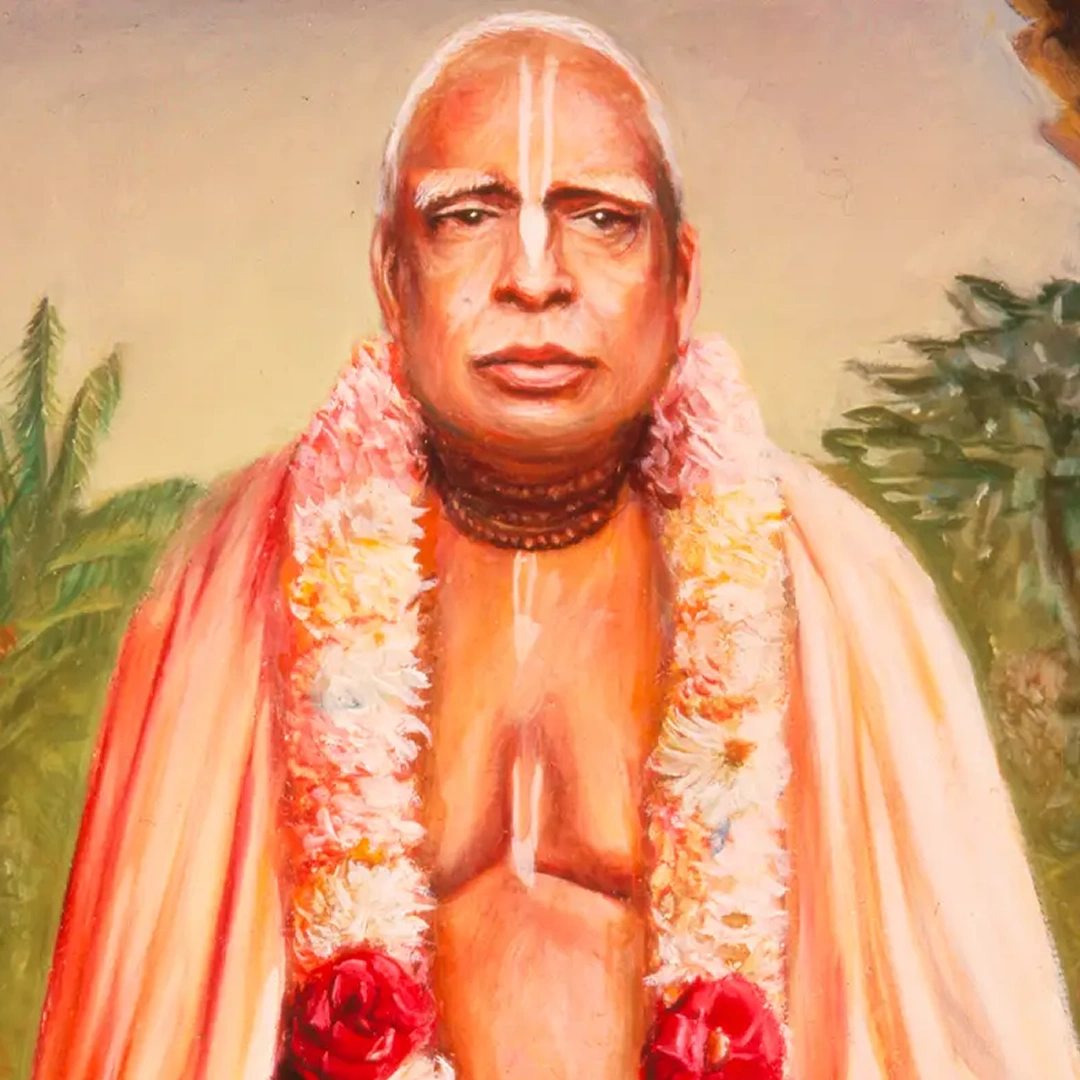
Gurudeva Krpa Bindu Diya
Bhaktivinoda Thakura