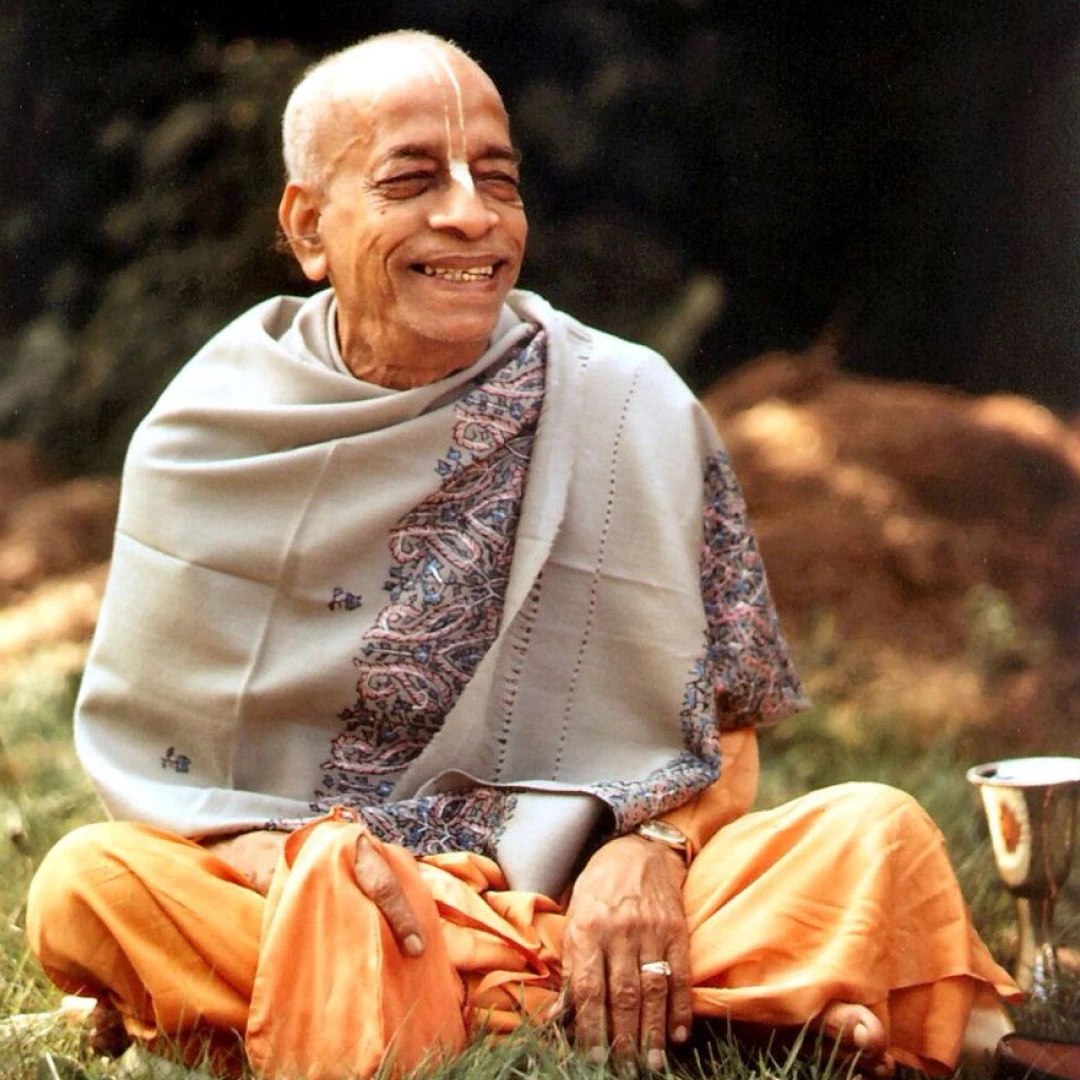
Ye Suddha Bhakta Ye Krsna Tomate Satata
Ye Suddha Bhakta Ye Krsna Tomate Satata
A.C. Bhaktivedanta Swami
Sannyaser Tattva Kiva Iccha
Bhajan
A.C. Bhaktivedanta Swami
75 verses · Lyrics only · English, Hindi
Sannyaser Tattva Kiva Iccha
A.C. Bhaktivedanta Swami
arjun kahilen: sannyaser tattva kiva iccha se sunite hrsikes kaha tai more bujhaite kesi nisudan kaha tyagera mahima sunite ananda hay nahi parsima
Arjuna said, O mighty-armed one, I wish to understand the purpose of renunciation [tyaga] and of the renounced order of life [sannyasa], O killer of the Kesi demon, Hrsikesa.
sri-bhagavan kahilen: kamakarma parityag sannyas se hay sarva karma phala-tyag tyag paricay vicaksan kari yata karila nirnay sei se sannyasa ar tyag nama hay
The Supreme Lord said, To give up the results of all activities is called renunciation [tyaga] by the wise. And that state is called the renounced order of life [sannyasa] by great learned men.
manisigan sarva karma tyag kare yajna dan tapa-kriya nahe, kahaye apare
Some learned men declare that all kinds of fruitive activities should be given up, but there are yet other sages who maintain that acts of sacrifice, charity and penance should never be abandoned.
tar madhye ye siddhanta kahi taha suna trividha se tyag hay bharata-sattama
O best of the Bharatas, hear from Me now about renunciation. O tiger among men, there are three kinds of renunciation declared in the scriptures.
svarupata yajna-dan kabhu tyajya nay sakala samaye taha karya yogya hay baddha jiv ache yata tadera kartavya manisi pavana sei yajna dana karya
Acts of sacrifice, charity and penance are not to be given up but should be performed. Indeed, sacrifice, charity and penance purify even the great souls.
se karyer anusthan phala-sanga tyag kartavyera anurodhe sudhu tahe rag
All these activities should be performed without any expectation of result. They should be performed as a matter of duty, O son of Prtha. That is My final opinion.
nirdista karmera tyag nahe se vidhan mohete se tyag hay tamasika jnan
Prescribed duties should never be renounced. If, by illusion, one gives up his prescribed duties, such renunciation is said to be in the mode of ignorance.
duhkha hay tar janya karma-tyaga kare kimba karma-tyag kare kaya-klesa dare rajasika tyag sei phal nahi pay sei ye kahinu yata sastrera nirnay
Anyone who gives up prescribed duties as troublesome, or out of fear, is said to be in the mode of passion. Such action never leads to the elevation of renunciation.
kartavya janiya yeva sarva karma kare phala-tyag karibare sattvika nam dhare
But he who performs his prescribed duty only because it ought to be done, and renounces all attachment to the fruit--his renunciation is of the nature of goodness, O Arjuna.
karytavera anurodhe akusala-o kare asakti nahi se kusal karmera tare medhavi ye tyagi sattva samavista hay chinna tar haye yay sakala samsay
Those who are situated in the mode of goodness, who neither hate inauspicious work nor are attached to auspicious work, have no doubts about work.
dehadhari jiva karma-tyag nahi kare karma-phala tyag kari tyagi nama dhare
It is indeed impossible for an embodied being to give up all activities. Therefore it is said that he who renounces the fruits of action is one who has truly renounced.
anista ista va misra karmaphala hay kintu sannyasira sei kichu bhog nay
For one who is not renounced, the threefold fruits of action--desirable, undesirable and mixed--accrue after death. But those who are in the renounced order of life have no such results to suffer or enjoy.
panca se karana hay sakala karyera mahavaho suna sei kahi se tomare vedanta siddhanta sei sastrera nirnay bhala-manda yaha kichu sei se paryay adhisthana karta ar karana p"thak vividha se cesta daiva e panca-sirsak
O mighty-armed Arjuna, learn from Me of the five factors which bring about the accomplishment of all action. These are declared in sankhya philosophy to be the place of action, the performer, the senses, the endeavor, and ultimately the Supersoul.
sarira vacan man karma tat dvara nyayya va a-nyayya yata karma sara sabara karana hay sei pa'ca vidha sakala karyera hay sei se hetava
Whatever right or wrong action a man performs by body, mind or speech is caused by these five factors.
murkha yara karta saje nija man gada na bujhiya karana se sudhu karta chada
Therefore one who thinks himself the only doer, not considering the five factors, is certainly not very intelligent and cannot see things as they are.
ataev ye na haya ahankare matta buddhi yar aham-bhave nahi hay lipta kartavyera anurodhe yadi visva mare kahake-o mare na se kimba karma kare
One who is not motivated by false ego, whose intelligence is not entangled, though he kills men in this world, is not the slayer. Nor is he bound by his actions.
karmera prerana hay jnan, jneya, jnata karmera samgraha se karan karma-karta
Knowledge, the object of knowledge and the knower are the three factors which motivate action; the senses, the work and the doer comprise the threefold basis of action.
jnan ar karta hay trividha gun bhede kahiba se trividha bhed tomake samksepe
In accordance with the three modes of material nature, there are three kinds of knowledge, action, and performers of action. Listen as I describe them.
ek jiv atma nana karmaphal bhede manusyadi sarva-dehe se vartaman ksede avyaya se jiv hay ek-tattva jnan bibhinnate ek dekhe sei sattvik jnan
That knowledge by which one undivided spiritual nature is seen in all existences, undivided in the divided, is knowledge in the mode of goodness.
vibhinna jivera sei prthakatva dekhe rajasik tar jnan nanabhave thake
That knowledge by which a different type of living entity is seen to be dwelling in different bodies is knowledge in the mode of passion.
dehake sarvasva bujhi ye jnan udbhav a-tattvajna alpa-buddhi tamasika sab
And that knowledge by which one is attached to one kind of work as the all in all, without knowledge of the truth, and which is very meager, is said to be in the mode of darkness.
rag dves sanga vina ye niyata karma se janibe sab sattvikera dharma
As for actions, that action in accordance with duty, which is performed without attachment, without love or hate, by one who has renounced fruitive results, is called action in the mode of goodness.
phalera kamana karma ahankar saha kastasadhya yata rajasa samuha
But action performed with great effort by one seeking to gratify his desires, and which is enacted from a sense of false ego, is called action in the mode of passion.
na bujhiya mohavase anubandha karma himsa paratap adi tamasika dharma
And that action performed in ignorance and delusion without consideration of future bondage or consequences, which inflicts injury and is impractical, is said to be action in the mode of ignorance.
mukta-sanga anahankar dhrti utsahapurna nirvikar siddhasiddhi sattvika se dhanya
The worker who is free from all material attachments and false ego, who is enthusiastic and resolute and who is indifferent to success or failure, is a worker in the mode of goodness.
karmasakta phale lobh himsuka asuci rajasik karta sei harsa-soke ruci
But that worker who is attached to the fruits of his labor and who passionately wants to enjoy them, who is greedy, envious and impure and moved by happiness and distress, is a worker in the mode of passion.
ayukta prakrta stabdha naiskrti alas dirghasutri visadi va karta se tamas
And that worker who is always engaged in work against the injunction of the scripture, who is materialistic, obstinate, cheating and expert in insulting others, who is lazy, always morose and procrastinating, is a worker in the mode of ignorance.
buddhira ye tin bhed dhrti ar gun dhananjay asesa vicar tar suna
Now, O winner of wealth, please listen as I tell you in detail of the three kinds of understanding and determination according to the three modes of nature.
pravrtti nivrtti karya akarya vicar bhayabhay bandha murti sattva-buddhi tar
O son of Prtha, that understanding by which one knows what ought to be done and what ought not to be done, what is to be feared and what is not to be feared, what is binding and what is liberating, that understanding is established in the mode of goodness.
dharmadharma karyakarya ayathavat jane rajasik sei buddhi sastrera pramane
And that understanding which cannot distinguish between the religious way of life and the irreligious, between action that should be done and action that should not be done, that imperfect understanding, O son of Prtha, is in the mode of passion.
dharmake adharma mane adharmake dharma viparita se tamasa buddhi ar karma
That understanding which considers irreligion to be religion and religion to be irreligion, under the spell of illusion and darkness, and strives always in the wrong direction, O Partha, is in the mode of ignorance.
ye dhrtir dvara dhare pranendriya kriya avyabhicarini bhakti sattviki se dhiya
O son of Prtha, that determination which is unbreakable, which is sustained with steadfastness by yoga practice, and thus controls the mind, life, and the acts of the senses, is in the mode of goodness.
ye dhrtir dvara dhare dharma, artha, kam phalakanksi rajasik hay tar nam
And that determination by which one holds fast to fruitive result in religion, economic development and sense gratification is of the nature of passion, O Arjuna.
ye dhrti dvara nahe svapna bhaya tyag tamasi se dhrti durmedha ara mada
And that determination which cannot go beyond dreaming, fearfulness, lamentation, moroseness, and illusion--such unintelligent determination is in the mode of darkness.
trividha se sukha suna bharata rsabha jada sukhe maje jiva kintu duhkha saba se sukha se uparati duhkha anta hay samsarera mayasukha tabe hay ksay agrete visera sama pascate am"ta ye sukhera paricaya se haya sattvika se sukhera labh hay atma-pramadete atma-buddhi bhagyavan yogya ye tahate
O best of the Bharatas, now please hear from Me about the three kinds of happiness which the conditioned soul enjoys, and by which he sometimes comes to the end of all distress. That which in the beginning may be just like poison but at the end is just like nectar and which awakens one to self-realization is said to be happiness in the mode of goodness.
indriyer samyogete visayera bhog am"tera mata ante kintu bhava rog pariname visayera visa hay labh rajasika sei sukh jivera svabhav
That happiness which is derived from contact of the senses with their objects and which appears like nectar at first but poison at the end is said to be of the nature of passion.
yaha agre anuvandhe sukhera mohan nidralasya pramadottha tamasika jan
And that happiness which is blind to self-realization, which is delusion from beginning to end and which arises from sleep, laziness and illusion is said to be of the nature of ignorance.
brahmandera madhye yata nara devaloke keha nahe mukta sei triguna triloke
There is no being existing, either here or among the demigods in the higher planetary systems, which is freed from the three modes of material nature.
brahmana ksatriya vaisya sudra parantap svabhava prabhave gun hay karma sab
Brahmanas, ksatriyas, vaisyas and sudras are distinguished by their qualities of work, O chastiser of the enemy, in accordance with the modes of nature.
sama dama tapa souca ksanti se arjava jnan vijnan astikya brahma karma-bhava
Peacefulness, self-control, austerity, purity, tolerance, honesty, wisdom, knowledge, and religiousness--these are the qualities by which the brahmanas work.
sourya teja dhrti daksya yuddhe na palay dan isa bhava yata ksatriye yuyaye
Heroism, power, determination, resourcefulness, courage in battle, generosity, and leadership are the qualities of work for the ksatriyas.
krsi go-raksa vanijya vaisya karma hay sudra ye svabhava tar paricarya karay
Farming, cow protection and business are the qualities of work for the vaisyas, and for the sudras there is labor and service to others.
ucca nica yata karma sabe siddhi hay svakarma kariya guna samsara taray
By following his qualities of work, every man can become perfect. Now please hear from Me how this can be done.
yini vyasti samasti va jagata karan ynaha hate bhutaganer vasana jivan svakarma kariya yadi sei prabhu bhaje siddhi-labha hay tar samsare na maje
By worship of the Lord, who is the source of all beings and who is all-pervading, man can, in the performance of his own duty, attain perfection.
asamyak anusthita nija dharma sreya susthu acarana kare paradharme bhaya nija svabhava niyata yei karma anusthan nispapa haibe tahe sastrera vidhan
It is better to engage in one's own occupation, even though one may perform it imperfectly, than to accept another's occupation and perform it perfectly. Prescribed duties, according to one's nature, are never affected by sinful reactions.
sadosa sahaja karma kabhu nahe aja tahatei siddhi labh hrdi sada bhaja jagatera saba kaj dos vina nay agrete yatha kada dhum dekha yay
Every endeavor is covered by some sort of fault, just as fire is covered by smoke. Therefore one should not give up the work which is born of his nature, O son of Kunti, even if such work is full of fault.
dosamsa tyagete yatha gunamsa grahan nija satta suddha kari svadharma sadhan anasakta buddhi jit atma sprhahin naiskarma siddhi se hay sannyasa pravin
One can obtain the results of renunciation simply by self-control and by becoming unattached to material things and disregarding material enjoyments. That is the highest perfectional stage of renunciation.
siddhi-labh kari yatha brahma prapti hay samksepete kahi suna tar paricay
O son of Kunti, learn from Me in brief how one can attain to the supreme perfectional stage, Brahman, by acting in the way I shall now summarize.
visuddha se buddhi yukta dhrti niyamita savdadi visaya tyag rag dves-jita vivikta ye laghubhoji yata vak man dhyana yoga para nitya vairagya sadhan ahankar val darpa kama parigraha krodh ar yata ache asata agraha nirmama ye santa yei brahma anubhave niscita samartha hay tahate sambhave
Being purified by his intelligence and controlling the mind with determination, giving up the objects of sense gratification, being freed from attachment and hatred, one who lives in a secluded place, who eats little and who controls the body and the tongue, and is always in trance and is detached, who is without false ego, false strength, false pride, lust, anger, and who does not accept material things, such a person is certainly elevated to the position of self-realization.
brahma anubhav hale prasannatm hay sok ar akanksa se nirmala niscay sarva-bhuta sama-buddhi tar paricay nirguna amara bhakti tabe labh hay
One who is thus transcendentally situated at once realizes the Supreme Brahman. He never laments nor desires to have anything; he is equally disposed to every living entity. In that state he attains pure devotional service unto Me.
nirguna bhaktite jane amara svarup savises nirvises tattvata ye rup se tattva-jnana labhe pravese amate ami brahma paramatmta bhagavan yate
One can understand the Supreme Personality as He is only by devotional service. And when one is in full consciousness of the Supreme Lord by such devotion, he can enter into the kingdom of God.
bhaktite prapti se hay bhagavad svarupa premapumartha mahan nam yar rupa sei premasraye yei sarva karma kare amara prasade para-vyom labh tare
Though engaged in all kinds of activities, My devotee, under My protection, reaches the eternal and imperishable abode by My grace.
se premasraye hao maccitta satata amara lagiya sarva karye hao rata sei buddhi-yoga nam amara asraya yahara prabhave karya sarva-siddhi haya
In all activities just depend upon Me and work always under My protection. In such devotional service, be fully conscious of Me.
maccita yei se tare amara prasade sarva-duhkha samsare duhkha va visade amara se upades yeva nahi mane ahankare matta haye vinase apane
If you become conscious of Me, you will pass over all the obstacles of conditional life by My grace. If, however, you do not work in such consciousness but act through false ego, not hearing Me, you will be lost.
ahankar kari bal yuddha na karibe mithya se pratijna tumi karibe svabhave
If you do not act according to My direction and do not fight, then you will be falsely directed. By your nature, you will have to be engaged in warfare.
svabhavaja karma taba avasya sadhive kaunteya nirvandha sab nija karma-bhave ataev mohavase iccha nahi kara avase karibe sei tumi atahpara
Under illusion you are now declining to act according to My direction. But, compelled by your own nature, you will act all the same, O son of Kunti.
isvara ache se sarva-bhutera hrdaye karma karma-phala sab niyantra karaye mayara yantrete tini sabare ghuray bhukti vancha kare jiv jei yatha cay
The Supreme Lord is situated in everyone's heart, O Arjuna, and is directing the wanderings of all living entities, who are seated as on a machine, made of the material energy.
tanhara carane lao sarvato saran prasade haibe sarva vanchita purana para santi pabe ar sasvata ye sthan sarva-labh se prasade duhkha nivaran
O scion of Bharata, surrender unto Him utterly. By His grace you will attain transcendental peace and the supreme and eternal abode.
guhya guhyatara jnan kahilam ami bhala-manda vicara ye se karibe tumi vicara kariya tumi yaha iccha kara upades amara se nitya tumi smara
Thus I have explained to you the most confidential of all knowledge. Deliberate on this fully, and then do what you wish to do.
tadapeksa guhyatama ar tumi suna atyanta se priya tumi tai se vacana
Because you are My very dear friend, I am speaking to you the most confidential part of knowledge. Hear this from Me, for it is for your benefit.
manmana mad-bhakta hao more namaskar amake paibe tumi pratijna amar
Always think of Me and become My devotee. Worship Me and offer your homage unto Me. Thus you will come to Me without fail. I promise you this because you are My very dear friend.
sarva dharma tyagi lao amara saran raksiva tomake ami sada sarvaksan kona cinta na karibe pap nahi habe amara sarane tumi para santi pabe
Abandon all varieties of religion and just surrender unto Me. I shall deliver you from all sinful reaction. Do not fear.
abhakta va atapaska paricarya hina amara svarupe ei yara sraddha ksina upadesa na karibe gitara vacan uparokta loka sab adhikari nan
This confidential knowledge may not be explained to those who are not austere, or devoted, or engaged in devotional service, nor to one who is envious of Me.
amara bhaktake yeva upades kare parabhakti labh kari paibe amare
For one who explains the supreme secret to the devotees, devotional service is guaranteed, and at the end he will come back to Me.
tadapeksa naraloke priya nahi mor hay nai habe nai anande bibhor
There is no servant in this world more dear to Me than he, nor will there ever be one more dear.
amara e upades yeva vicar karibe tar jnana-yajne mor upasana habe
And I declare that he who studies this sacred conversation worships Me by his intelligence.
sraddhavan haye yara sravana karibe punyavan tar subha loka-prapti habe
And one who listens with faith and without envy becomes free from sinful reactions and attains to the planets where the pious dwell.
dhananjay, kaha eve kiva sanka hala dur ekagrete upades suniya pracur he partha, kiva tava ajnana andhakar pranasta haiya gela tava duhkha bhar
O conqueror of wealth, Arjuna, have you heard this attentively with your mind? And are your illusions and ignorance now dispelled?
arjun kahilen: nasta moha smrti labha tomara prasade acyuta, sandeha gela nahi se visade sthita ami nija karye tomara vacana niscayai kariba ami ghucila vandhana
Arjuna said, My dear Krsna, O infallible one, my illusion is now gone. I have regained my memory by Your mercy, and I am now firm and free from doubt and am prepared to act according to Your instructions.
sanjay kahilen: sei se sunechi ami krsnarjuna katha adbhuta samvada romaharsana sarvatha
Sanjaya said: Thus have I heard the conversation of two great souls, Krsna and Arjuna. And so wonderful is that message that my hair is standing on end.
vyasera prasade ami sunilam sei parama se guhyatama tulana ye nei ei yog yogesvara krsna se kahila saksat tnahar mukhe ami se sunila
By the mercy of Vyasa, I have heard these most confidential talks directly from the master of all mysticism, Krsna, who was speaking personally to Arjuna.
smarana kariya raja punah punah sei adbhuta samvada smari hrsta ami hai kesava ara arjun katha punya gita muhurhmuhu sune nitya sarvahite rata
O King, as I repeatedly recall this wondrous and holy dialogue between Krsna and Arjuna, I take pleasure, being thrilled at every moment.
smarana kariya sei adbhuta svarupa punah punah hrsta man hay aparupa
O King, when I remember the wonderful form of Lord Krsna, I am struck with even greater wonder, and I rejoice again and again.
yatha yogesvar krsna partha dhanurdhar tatha sri vijaya bhuti dhruva nirantar yei nam sei krsna nahi se antara suddha nam yar hay sei dhurandhara
Wherever there is Krsna, the master of all mystics, and wherever there is Arjuna, the supreme archer, there will also certainly be opulence, victory, extraordinary power, and morality. That is my opinion.
bhaktivedanta kahe sri-gitara gan sune yadi suddha bhakta krsnagata-pran
Thus Bhaktivedanta sings the song of Sri Gita, with the hope that hearing this, Krsna conscious pure devotees will be pleased.
Same composer, mood or theme
Ye Suddha Bhakta Ye Krsna Tomate Satata
A.C. Bhaktivedanta Swami
Sri Guru Vandana Kori
A.C. Bhaktivedanta Swami
Abara Bali Ye Suna Parama Vacana
A.C. Bhaktivedanta Swami
Purve Ami Balechilam Suryake Pratham
A.C. Bhaktivedanta Swami
Maha Vadanya Isvara Sri Gaura Sundara
A.C. Bhaktivedanta Swami
He Krsna Barek Karma Tyaga
A.C. Bhaktivedanta Swami
The Disciple's Empowerment is Lost
A.C. Bhaktivedanta Swami
The Degraded Symptoms of Kali-yuga
A.C. Bhaktivedanta Swami
Gauranga Bolite Habe Pulaka Sarira
A.C. Bhaktivedanta Swami
Evara He Arjuna Suna
A.C. Bhaktivedanta Swami
Returning your wealth to Krishna
A.C. Bhaktivedanta Swami
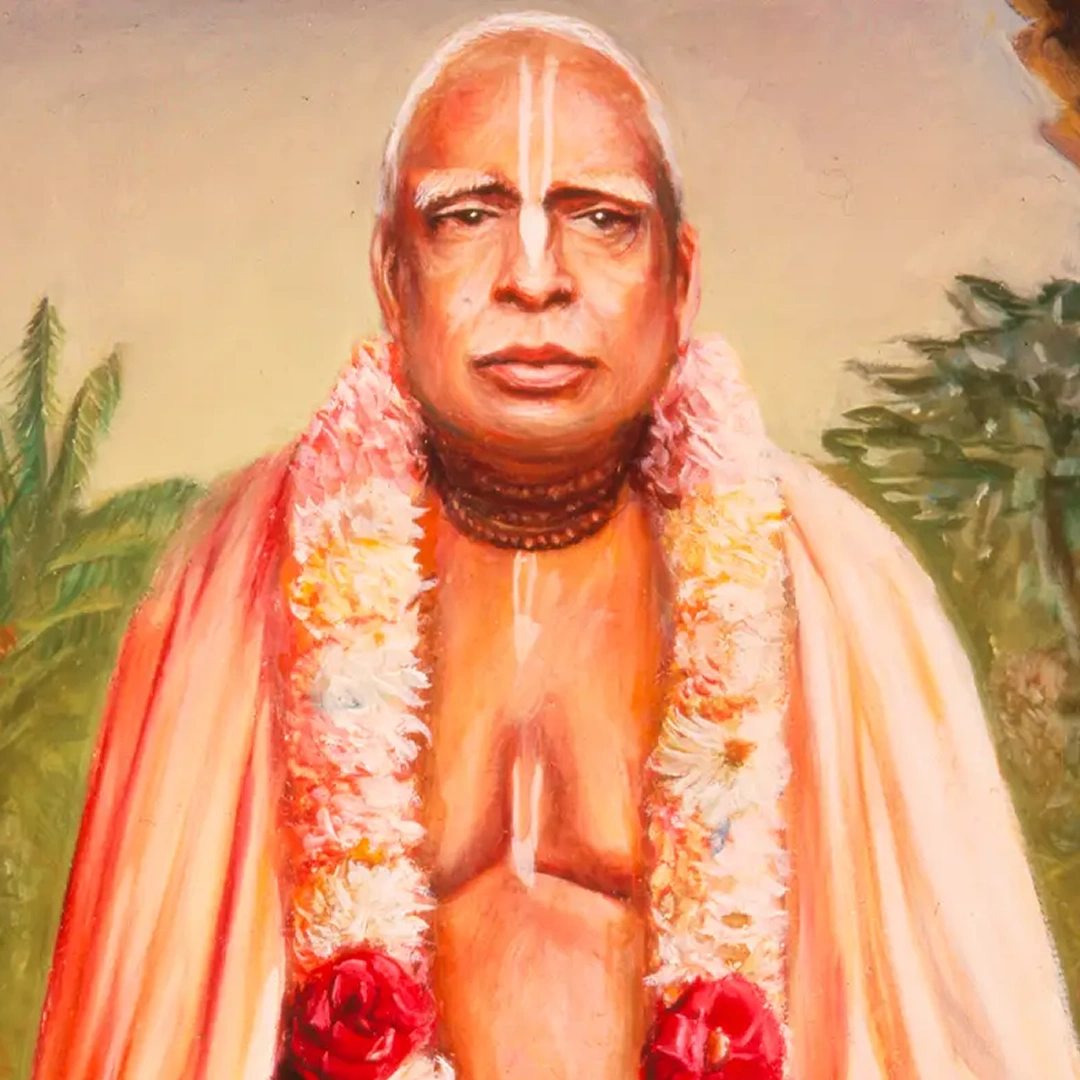
Gurudeva Krpa Bindu Diya
Bhaktivinoda Thakura