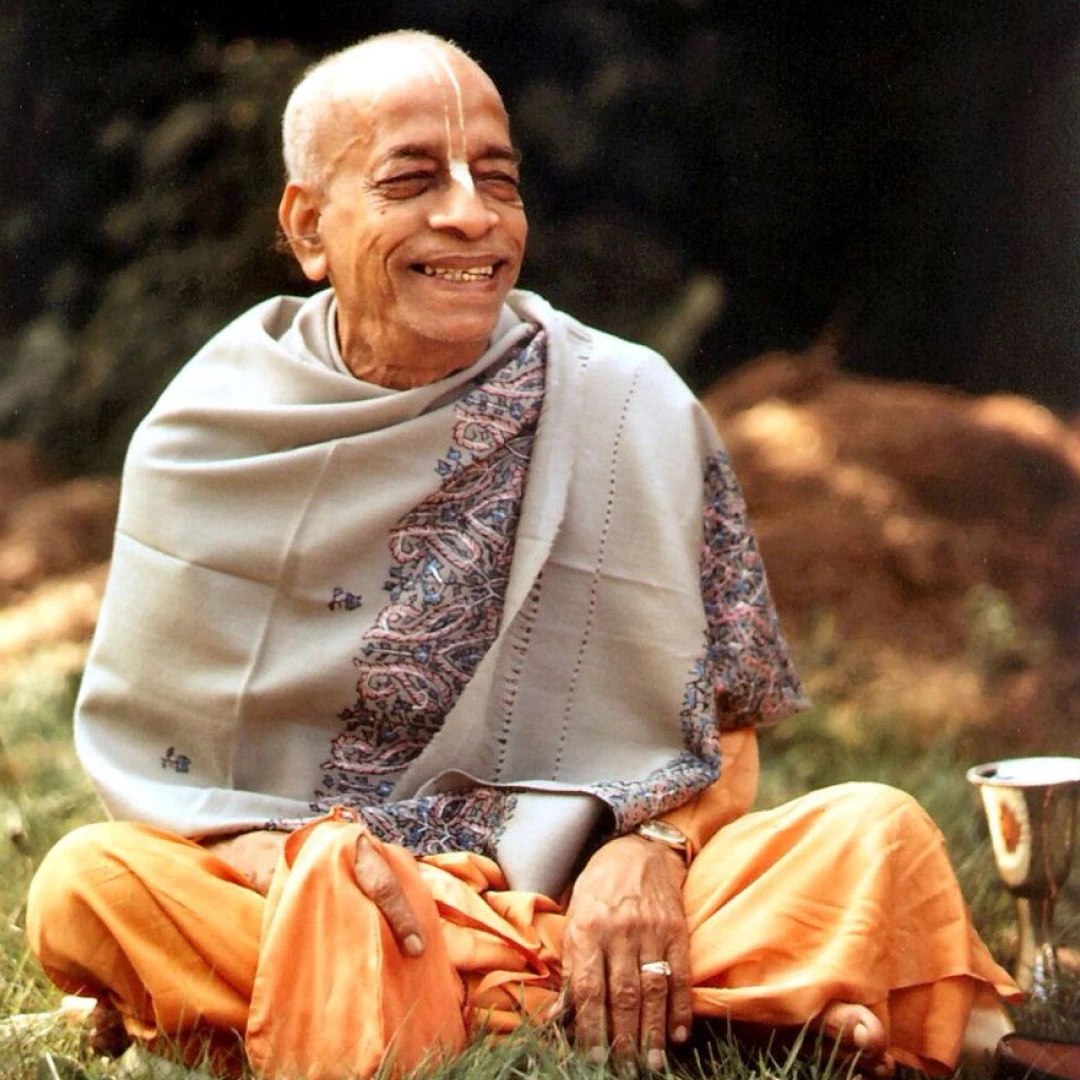
Ye Suddha Bhakta Ye Krsna Tomate Satata
Ye Suddha Bhakta Ye Krsna Tomate Satata
A.C. Bhaktivedanta Swami
Dekhiya Arjune Sei Asrujale
Bhajan
Gitar Gan
71 verses · Lyrics only · English, Hindi
Dekhiya Arjune Sei Asrujale
A.C. Bhaktivedanta Swami
dekhiya arjune krsna sei asrujale krpay avista haye bhavita vikale krpamay madhusudan kahila tahare iti-vakya bandhu-bhave ati mista-svare
Sanjaya said: Seeing Arjuna full of compassion and very sorrowful, his eyes brimming with tears, Madhusudana, Krsna, spoke the following words.
sri-bhagavan kahilen: kibhave arjuna tumi ghor yuddhasthale anaryer sokanal pradipta karile akirti asvarga labh haibe tomar chi chi bandhu chada ei ayogya acar
The Supreme Person [Bhagavan] said: My dear Arjuna, how have these impurities come upon you? They are not at all befitting a man who knows the progressive values of life. They do not lead to higher planets, but to infamy.
napumsak naha partha e ki vyavahar yogya nahe e karya bandhu ye amar hrday-daurvalya ei niscayai janibe chada ei, kara yuddha yadi satruke maribe
O son of Prtha, do not yield to this degrading impotence. It does not become you. Give up such petty weakness of heart and arise, O chastiser of the enemy.
arjun kahilen: madhusudan! ki ajna kara tumi more bhisma dron gurujan tare maribare? pujar yogya ye tnara han nityakala tnader sarire van sutiksna dharala?
Arjuna said: O killer of Madhu [Krsna], how can I counterattack with arrows in battle men like Bhisma and Drona, who are worthy of my worship?
sudhu guru nahe tnara mahanubhav hay ynara hatya kari tnader sabare tadapeksa bhiksa bhala katiye yaibe kal, mithya yuddha karao amare hatya ei mahakam vidhi ye haila vam, ei yuddhe guru hatya habe se bhog rudhira makha kemane kariba sakha, se yuddha ke kariyache kabe
It is better to live in this world by begging than to live at the cost of the lives of great souls who are my teachers. Even though they are avaricious, they are nonetheless superiors. If they are killed, our spoils will be tainted with blood.
bujhite pari na bhala, kothaya garima hala, kon karya juyaya amay kiva ami jay kari, kimba ami nije mari dui nouka amare nacay yader mariya rane, baciba se akarane, tara sab amar sammukhe dhrtarastra-putragan, ar yata bandhu-jan, marile se habe mor duhkha
Nor do we know which is better--conquering them or being conquered by them. The sons of Dhrtarastra, whom if we kill we should not care to live, are now standing before us on this battlefield.
karpanya dosete dusi mohete hayechi vasi, sva svabhav hala apahrta nija dharma chadi mudha jijnasi tomare drdha krpa kari karaha samyata tumi jana hita mor hayechi mohete bhor, bhala yate karaha bicare hainu tomar sisya, dekhuk sakal visva, siksa dao ei prapannere
Now I am confused about my duty and have lost all composure because of weakness. In this condition I am asking You to tell me clearly what is best for me. Now I am Your disciple, and a soul surrendered unto You. Please instruct me.
dekhi na ami ye andha, tahe buddhi ati manda, so-kanal nibhibe kibhabe ye sok jvalaya more, indriyadi sab pode, bhava-rog kirupe ghucabe yadi pai tribhuvan, rajya-laksmi sulobhan, asapatna rajyera vikasa devaloke adhipatya, tomake kahinu satya, nahi habe e soka vinasa
I can find no means to drive away this grief which is drying up my senses. I will not be able to destroy it even if I win an unrivaled kingdom on earth with sovereignty like the demigods in heaven.
sanjay kahilen: se-katha baliya gudakesa paratapi hrsikese nivedila yadio pratapi he govinda! mor dvara yuddha nahi habe yuddha chadi sei vir rahila nirabe
Sanjaya said: Having spoken thus, Arjuna, chastiser of enemies, told Krsna, "Govinda, I shall not fight," and fell silent.
snigdha hasi manohar hrsikes bale he bharat! arjunera suniya sakale yuddha ksetre sainya-madhye hasiya hasiya upadesa karen gita visanna dekhiya
O descendant of Bharata, at that time Krsna, smiling, in the midst of both the armies, spoke the following words to the grief-stricken Arjuna.
sri-bhagavan kahilen: asocya visaye sok kara tumi vir prajnavad bhasyakar yena kona dhir pandita ye jana hay sok nahi tar mrta deha nitya atma se jane vicar
The Blessed Lord said: While speaking learned words, you are mourning for what is not worthy of grief. Those who are wise lament neither for the living nor the dead.
tumi ami yata raja sammukhe tomar era sab cira nitya karaha vicar purve era nahi chila pare na thakibe murkhera vicara ei niscayai janibe
Never was there a time when I did not exist, nor you, nor all these kings; nor in the future shall any of us cease to be.
deha dehi bhed dui nityanitya sei kaumar youvan jara parivartan yei deher svakarya hay dehi nitya rahe tatha dehantar-prapti panditera kahe
As the embodied soul continuously passes, in this body, from boyhood to youth to old age, the soul similarly passes into another body at death. A self-realized soul is not bewildered by such a change.
sit usna sukh duhkha indriya vikar indriyer dasa yara tahe adhikar se sab anitya vastu asi cali yay sahisnuta matra gun tahara upaya
O son of Kunti, the nonpermanent appearance of happiness and distress, and their disappearance in due course, are like the appearance and disappearance of winter and summer seasons. They arise from sense perception, O scion of Bharata, and one must learn to tolerate them without being disturbed.
vyatha nahi dyaya yare anitya eisab sejan bujhila jana purusartha vaibhav samaduhkha sukha-dhir anitya vyapare amaratva sei pay jitiya samsare
O best among men [Arjuna], the person who is not disturbed by happiness and distress and is steady in both is certainly eligible for liberation.
asat sarira ei satta nahi tar nitya-satya jiv haya mrtyu nahi yar ubhaya vicar kari karila niscit tattvadarsi sei kahe yei hay hit
Those who are seers of the truth have concluded that of the nonexistent there is no endurance, and of the existent there is no cessation. This seers have concluded by studying the nature of both.
avinasi sei bujha sarvatra vistar yahar abhave haya deha mahabhar ksay-vyay nahi yar ke marite pare amarer mar kiva karaha vicar
Know that which pervades the entire body is indestructible. No one is able to destroy the imperishable soul.
nihsesa haiya yabe ei jada deha nitya atma jana bhala na maribe keha vinasi prameya nahe atma bhala mate satya bujhi drdha-vrata hao ta' yuddhete
Only the material body of the indestructible, immeasurable and eternal living entity is subject to destruction; therefore, fight, O descendant of Bharata.
ye jana bujheche atma mare yete pare athava ye jana bujhe atma anye mare ubhayei bhramatmak kichu nahi bujhe mare na mare na atma jana yuddha yujhe
He who thinks that the living entity is the slayer or that he is slain, does not understand. One who is in knowledge knows that the self slays not nor is slain.
janama marana nai, haya nai, habe nai hayechila taha nahe atma aja nitya sasvata, puratana nitya satya, sarirer nas nahe mrtyu
For the soul there is never birth nor death. Nor, having once been, does he ever cease to be. He is unborn, eternal, ever-existing, undying and primeval. He is not slain when the body is slain.
ye jeneche atma nitya aja avinasi avyay ajar atma sarva divanisi se kena maribe anye murkhera matan se jane niscita atma mare na kakhana
O Partha, how can a person who knows that the soul is indestructible, unborn, eternal and immutable, kill anyone or cause anyone to kill?
puratana vastra yatha, bhangura sarira tatha ek chadi anya vastra par puratana vastra chade, navina basana pare navina sarira sei dhare jirna sarir chadi, navina sarira dhari dehinavya haya punarvara deha dehi ei bhed, tahate va kiva khed chada duhkha yuddha karibara
As a person puts on new garments, giving up old ones, similarly, the soul accepts new material bodies, giving up the old and useless ones.
astraghate nahi kate cinmaya sarir agni na jvalaya taha suna vijna vir jal dvara nahi bhije vayu na sukay ghat pratighat sab jadete juyay
The soul can never be cut into pieces by any weapon, nor can he be burned by fire, nor moistened by water, nor withered by the wind.
acchedya je atma hay akledya asosya cidananda atma nahe jadera se posya sarvatra atmara gati sthir sanatan acala atala atma nitya se nutan
This individual soul is unbreakable and insoluble, and can be neither burned nor dried. He is everlasting, all-pervading, unchangeable, immovable and eternally the same.
kata jvala bhija suka jadera laksan jader dvara vyakta nahe avyakta kakhan man dvara cintya hay jadera laksan atma jada vastu nahe acintya kathan jadera vikara hay atma avikar jada atma bibhinnata suna bar bar yatha-yatha atma-tattva karaha vicar vicara karile citte pabe camatkar
It is said that the soul is invisible, inconceivable, immutable, and unchangeable. Knowing this, you should not grieve for the body.
vicara karibe yabe sok nahi rabe atmara nityatva jani nityananda pabe yadi tai mana tumi dehai sarvasva paricaya nahi kichu atmara nijasva nitya janma nitya mrtyu deha matra hay tabuo tomara duhkha nahi tabu tay
If, however, you think that the soul is perpetually born and always dies, still you still have no reason to lament, O mighty-armed.
jada deha upajaya anivarya ksay ksay haye jada dravya punah upajay jada dravya rupa chadi anya rupa hay nutana rupera janya anya rupa kay ei jada vijna yadi karaye vicar tathapi sokera katha nahe tiladhar
For one who has taken his birth, death is certain; and for one who is dead, birth is certain. Therefore, in the unavoidable discharge of your duty, you should not lament.
jadera rupadi nahi pareo thake na madhye matra rupa guna sakali bhavana ataeva nirakara yadi nirakar tahate tomara duhkha kisera abar
All created beings are unmanifest in their beginning, manifest in their interim state, and unmanifest again when they are annihilated. So what need is there for lamentation?
ascarya atmar katha, na bujhaye yatha tatha ascarya tahar dekha-suna ascarya kehava bale, ascarya kehava chale ascarya tahar adhyapana ascarya haiya sune, tathapi va nahi mane ascarya ye ascaryera katha ascarya haiya rahe, ascarya bujhite nahe ascarya ati durlabhata
Some look at the soul as amazing, some describe him as amazing, and some hear of him as amazing, while others, even after hearing about him, cannot understand him at all.
siddhanta atmara kathad suna he bharat vedanta amara katha suna sei-mata dehi nitya mare nahi sakala deher deher vinasa tai nahe ta' soker
O descendant of Bharata, he who dwells in the body is eternal and can never be slain. Therefore you need not grieve for any creature.
nija dharma dekhi punah na hao vikal ksatriyera yuddha kara dharma ye sakal
Considering your specific duty as a ksatriya, you should know that there is no better engagement for you than fighting on religious principles; and so there is no need for hesitation.
anayase paiyacha svarga-dvar khola se yuddha karyete nahi kara abahela bhagyavan vir sei hena yuddha pay yuddha kari yajna-phal ksatriya labhay
O Partha, happy are the ksatriyas to whom such fighting opportunities come unsought, opening for them the doors of the heavenly planets.
ataeva tumi partha yadi yuddha chada svadharma svakirti sab ekatre ugara
If, however, you do not fight this religious war, then you will certainly incur sins for neglecting your duties and thus lose your reputation as a fighter.
tomara akirti lok niscayai gahibe vaciya marana taba vighosita habe
People will always speak of your infamy, and for one who has been honored, dishonor is worse than death.
maharath yara sab ninda ye karibe bhay peye chade ran tara ye balibe yahader ganya-manya tumi ye ekhan sakaler cakse chota haibe takhan
The great generals who have highly esteemed your name and fame will think that you have left the battlefield out of fear only, and thus they will consider you a coward.
kata galagali dibe akathya kathan bhabi dekha taba hita ki habe takhan nija ninda suni tumi niraba rahibe bala partha sei ninda kemane sahibe
Your enemies will describe you in many unkind words and scorn your ability. What could be more painful for you?
mare yadi svarga pao seo bhala katha baciya paibe bhog nahe se anyatha baca mara dui bhala yuddhete niscay hena yuddha chada tumi ascarya visay he kaunteya utha tumi nahi kara hela yuddha karibare niscaya kara ei bela
O son of Kunti, either you will be killed on the battlefield and attain the heavenly planets, or you will conquer and enjoy the earthly kingdom. Therefore get up and fight with determination.
sukha-duhkha samakar hani labha saba jaya-jay nahi bhay kartavya baliba yuddhera lagiya tumi sudhu yuddha kara nahi tate pap bhay ei satya bada
Do thou fight for the sake of fighting, without considering happiness or distress, loss or gain, victory or defeat--and, by so doing, you shall never incur sin.
jnanera vicare sab balinu tomake ebe suna buddhi-yoge jnan paripaka jnanira yogyata yadi paripak hay bhakti dvara buddhi-yog tabe se bujhay bhakti-yukta karma haya karma-yoga nam yahar sadhane karma bandhana viram
Thus far I have declared to you the analytical knowledge of sankhya philosophy. Now listen to the knowledge of yoga whereby one works without fruitive result. O son of Prtha, when you act by such intelligence, you can free yourself from the bondage of works.
ksay vyay nahi nas se karya sadhane yaha para kare yao sancay e dhane svalpa matra haya yadi se dharma sadhan maha-bhay hate raksa paibe takhan
In this endeavor there is no loss or diminution, and a little advancement on this path can protect one from the most dangerous type of fear.
vyavasayatmika buddhi he kuru-nandana ek-matra haya taha bahu na kakhana ananta apar se a-vyavasayi hay bahu sakha bistarita ke kare nirnay
Those who are on this path are resolute in purpose, and their aim is one. O beloved child of the Kurus, the intelligence of those who are irresolute is many-branched.
puspera sajane yaha ista mista katha karmira hrday taha kare prafullita sei veda badi sab bhoger karan yatha-sarva sei katha karaye varan murkha sei bhogabadi apata madhur datta-citta haye yaya asale phatur kamatmana loka sab svarga bhog cay karma-phal bhoga-lipsa ar na bujhay adambare bhule yaya bhogaisvarya cay buddhi-yog ek laksya taha na manay
Men of small knowledge are very much attached to the flowery words of the Vedas, which recommend various fruitive activities for elevation to heavenly planets, resultant good birth, power, and so forth. Being desirous of sense gratification and opulent life, they say that there is nothing more than this.
bhogaisvarye asakta ye pagalera mata nijeke hariya base asa sata sata tara nahi bujhe vyavasayatmika buddhi asakti tader sudhu bhukti mukti siddhi
In the minds of those who are too attached to sense enjoyment and material opulence, and who are bewildered by such things, the resolute determination of devotional service to the Supreme Lord does not take place.
trigunera madhye ved sattva rajastama tahara upare utha tabe se uttama takhani dvandva bhav ghucibe tomar nitya suddha sattva bhav habe aviskar atmavana hay sada niryoga niksem ye dhane se dhani taha bhagavad prem
The Vedas mainly deal with the subject of the three modes of material nature. Rise above these modes, O Arjuna. Be transcendental to all of them. Be free from all dualities and from all anxieties for gain and safety, and be established in the Self.
sei preme bhasaman sarva labha pay kupa jala nadi jal yatha yatha hay ek kupe hay ek karyera sadhan nadira jalete hay ekatre bhajan vedera tatparya sei ek laksya hay brahmana ye hay sei samasta bujhay
All purposes that are served by the small pond can at once be served by the great reservoirs of water. Similarly, all the purposes of the Vedas can be served to one who knows the purpose behind them.
nija adhikar matra karma kare yao karma-phal nahi cao asakti ghucao karma-phal hetu sada na haibe tumi anukula karma yei sei karma bhumi
You have a right to perform your prescribed duty, but you are not entitled to the fruits of action. Never consider yourself to be the cause of the results of your activities, and never be attached to not doing your duty.
yogi haye kara karma asakti rahita asakti rahita karma bhagavane prita dhananjaya! sanga tyaji karma kare yao siddhi va asiddhi sama vaisamya ghucao ei sama bhav hay yogo siddhi nam sei siddhi-labhe purna sarva manaskam
Be steadfast in yoga, O Arjuna. Perform your duty and abandon all attachment to success or failure. Such evenness of mind is called yoga.
buddhi-yoga dvara chada karma avaradi kam krsna karmarpane na hao visadi anuksan sei buddhe saranagati yar krpaner phal hetu iccha nahe tar
O Dhananjaya, rid yourself of all fruitive activities by devotional service, and surrender fully to that consciousness. Those who want to enjoy the fruits of their work are misers.
buddhi-yog dvara karma sukrti ye phal duskrti va phale yaha karaye nirmal ataev tumi sei yoge yuddha kara karmera kousal ei buddhi-yog dhara
A man engaged in devotional service rids himself of both good and bad actions even in this life. Therefore strive for yoga, O Arjuna, which is the art of all work.
manisi yei se karma buddhi yog dvara tyagete samartha hay karma phal sara janma-bandha vinirmukta sei karma-yogi anamay pada prapta haya sei tyagi
The wise, engaged in devotional service, take refuge in the Lord, and free themselves from the cycle of birth and death by renouncing the fruits of action in the material world. In this way they can attain that state beyond all miseries.
yakhana tomara man buddhi yog dvara moharupa kardamakta haye yabe para takhana nirved sab haye yabe kam srutira srotavya taba nahi rabe dham
When your intelligence has passed out of the dense forest of delusion, you shall become indifferent to all that has been heard and all that is to be heard.
srutira grhita jnan yakhana niscala karma jnan yoga adi takhani saphala samadhi takhana hay karma yoge sthiti sthita-prajna tar nama yogarudha gati
When your mind is no longer disturbed by the flowery language of the Vedas, and when it remains fixed in the trance of self-realization, then you will have attained the divine consciousness.
arjun kahilen: ki laksan sthita-prajna kiva tnar bhasa he kesav! kaha more samadhistha asa sthita-dhi ki bale kimba utha-basa kare ki bhabe gaman kare kahata bistare
Arjuna said: What are the symptoms of one whose consciousness is thus merged in Transcendence? How does he speak, and what is his language? How does he sit, and how does he walk?
sri-bhagavan kahilen: nijera indriya sukhe yata kam ache baddha jiva mano-dharme dhaya pache pache se sab kamana tyaji atma-bhagavane sambandha janiya krame hay aguyane takhana janibe tusta sthita-prajna sukhi e chada ar ye lok sakalei duhkhi
The Blessed Lord said: O Partha, when a man gives up all varieties of sense desire which arise from mental concoction, and when his mind finds satisfaction in the self alone, then he is said to be in pure transcendental consciousness.
duhkhe anudvigna-mana sukhe nahi sprha nija seba karye ynar ekamatra iha vitarag soka bhay krodh nahi ynar se jana sthita-dhi muni vidita sabar
One who is not disturbed in spite of the threefold miseries, who is not elated when there is happiness, and who is free from attachment, fear and anger, is called a sage of steady mind.
deha smrti nahi ynar subhasubha kiba tar sarvatra anabhi sneha lok vyavahar abhinanda dves nai sarva hite rata tanhar janio prajna sthir pratisthita
He who is without attachment, who does not rejoice when he obtains good, nor lament when he obtains evil, is firmly fixed in perfect knowledge.
go-dasa indriya sukhe vicalita sada gosvami hayeche dhir atmate sarvada tai se indriya saba kurma anga mata indriya bhogartha sada visaye virata ataeva jani tnara prajna pratisthita se jana upadhi mukta gosvami vidita
One who is able to withdraw his senses from sense objects, as the tortoise draws its limbs within the shell, is to be understood as truly situated in knowledge.
vairagya kariya hay visaya-nivrtti taha nahe sthita-prajna svabhavik vrtti paramananda jani yeba jadananda chade sthita-prajna sei vir visaya vihare
The embodied soul may be restricted from sense enjoyment, though the taste for sense objects remains. But, ceasing such engagements by experiencing a higher taste, he is fixed in consciousness.
atmara samparka nai vairagyer yatan pandita haleo tar prasabhita man pramathi indriya take visayete phele suska vairagir lage aguna kapale
The senses are so strong and impetuous, O Arjuna, that they forcibly carry away the mind even of a man of discrimination who is endeavoring to control them.
krsna-seva yukta hay indriya samyata indriya ye bas hay prajna pratisthita
One who restrains his senses and fixes his consciousness upon Me, is known as a man of steady intelligence.
suska vairagya ye ar visayete dhyan krame krame sanga sei hay aguyan sanga krame kam haya kame krodha hay krodhe sammohan pare vibhrama badaya smrti bhrasta hale pare buddhi-nasa hay vairagir sarva-nas sei se paryay
While contemplating the objects of the senses, a person develops attachment for them, and from such attachment lust develops, and from lust anger arises.From anger, delusion arises, and from delusion bewilderment of memory. When memory is bewildered, intelligence is lost, and when intelligence is lost, one falls down again into the material pool.
ataeva rag dves nahi ynar ati mukta yeva haiyache visayera gati citta prasade se hay krsnarpita man visaye thakiya tini jivanmukta han
One who can control his senses by practicing the regulated principles of freedom can obtain the complete mercy of the Lord and thus become free from all attachment and aversion.
paramananda sukh yei prasada tar nam yahara praptite duhkha hay antardhan se prasade pratisthita ye hay niscita atmanistha buddhi tar jagate vidita
For one who is so situated in the Divine consciousness, the threefold miseries of material existence exist no longer; in such a happy state, one's intelligence soon becomes steady.
jivera svarupa hay anandete mati buddhiyoga vina tara kothay va gati ataeva se bhavana nahi yar sthiti kotha santi tar bala sukhera pragati
One who is not in transcendental consciousness can have neither a controlled mind nor steady intelligence, without which there is no possibility of peace. And how can there be any happiness without peace?
indriya calita kari manodharme sthiti vayura madhyete yatha noukara pragati se nouka yemana sada talamala kare ayukta vyaktira prajna seirupa hare
As a boat on the water is swept away by a strong wind, even one of the senses on which the mind focuses can carry away a man's intelligence.
ataeva mahavaho suna man diya nigrhita man ynara amare snapiya tnahara indriya vas more samarpita tnahara-i prajna haya purna pratisthita
Therefore, O mighty-armed, one whose senses are restrained from their objects is certainly of steady intelligence.
visayi visaye nistha kare se pracur sarvada jagrata sei sada bharapur samyamira sei cesta nisara saman samyami jagrata thake atma-visayan visayira sei atma ratrira saman ubhayera karya haya bahu vyavadhan
What is night for all beings is the time of awakening for the self-controlled; and the time of awakening for all beings is night for the introspective sage.
samudre nadir jala yemana praves vicalita nahe sei sada nirvises seibhabe mane yar kamera calana se santi paibe phal santira sadhana
A person who is not disturbed by the incessant flow of desires--that enter like rivers into the ocean which is ever being filled but is always still--can alone achieve peace, and not the man who strives to satisfy such desires.
kama chadi saba yeba nisprha dhiman sarvatra bhramana kare naradiya gan mamata-vihina ar ahankara nai tar santi viniscita sei ta' gosnai
A person who has given up all desires for sense gratification, who lives free from desires, who has given up all sense of proprietorship and is devoid of false ego--he alone can attain real peace.
sei se smrtir nam brahmi-sthiti hay ynar prapti hay tnar mohana kothaya sei sthiti yadi haya maranera kale brahma-sthiti bhava nahe kalera kabala
That is the way of the spiritual and godly life, after attaining which a man is not bewildered. Being so situated, even at the hour of death, one can enter into the kingdom of God.
bhaktivedanta kahe sri-gitara gan sune yadi suddha bhakta krsnagata-pran
Thus Bhaktivedanta sings the song of Sri Gita, with the hope that hearing this, Krsna conscious pure devotees will be pleased.
Same composer, mood or theme
Ye Suddha Bhakta Ye Krsna Tomate Satata
A.C. Bhaktivedanta Swami
Sri Guru Vandana Kori
A.C. Bhaktivedanta Swami
Abara Bali Ye Suna Parama Vacana
A.C. Bhaktivedanta Swami
Sannyaser Tattva Kiva Iccha
A.C. Bhaktivedanta Swami
Purve Ami Balechilam Suryake Pratham
A.C. Bhaktivedanta Swami
Maha Vadanya Isvara Sri Gaura Sundara
A.C. Bhaktivedanta Swami
He Krsna Barek Karma Tyaga
A.C. Bhaktivedanta Swami
The Disciple's Empowerment is Lost
A.C. Bhaktivedanta Swami
The Degraded Symptoms of Kali-yuga
A.C. Bhaktivedanta Swami
Gauranga Bolite Habe Pulaka Sarira
A.C. Bhaktivedanta Swami
Evara He Arjuna Suna
A.C. Bhaktivedanta Swami
Returning your wealth to Krishna
A.C. Bhaktivedanta Swami